



How Can We Turn Challenge into the Joy of Learning?
Reh Freitas
According to Macedo (2005, p. 13), play is crucial to human development, and it is through playfulness that children discover the joy of learning.
“(...) Play is engaging, interesting, and informative. It is engaging because it places the child in a context of interaction in which physical and imaginative activities, as well as the objects that serve as their projection or support, are part of the same topological continuum. It is interesting because it channels, guides, and organizes the child’s energies, giving them the form of an activity or occupation. It is informative because, in this context, the child can learn about the characteristics of objects and about the ideas that are thought through or imagined” (MACEDO, 2005, pp. 13–14).
When children play games, they formulate hypotheses, interact with their peers, and learn how to learn, because “play is serious, since it requires attention and concentration” (MACEDO, 2005, p. 14).
According to Macedo (2005, p. 14), when children encounter a game, they reveal a great deal through their actions and through the way they reflect. From that point on, it is up to the educator, when presenting the challenge—the game—to “transform information into meaningful data,” that is, to act as an observer while the child plays.
“(...) When a person plays according to rules, whether that person is a child, an adolescent, or even an adult, the cognitive and social skills and competencies developed in that process become part of their mental structure and may be generalized to a wide range of other situations. This applies to solving problems related to school, professional life, and even relationships with other people” (OLIVEIRA, 2004, p. 7).
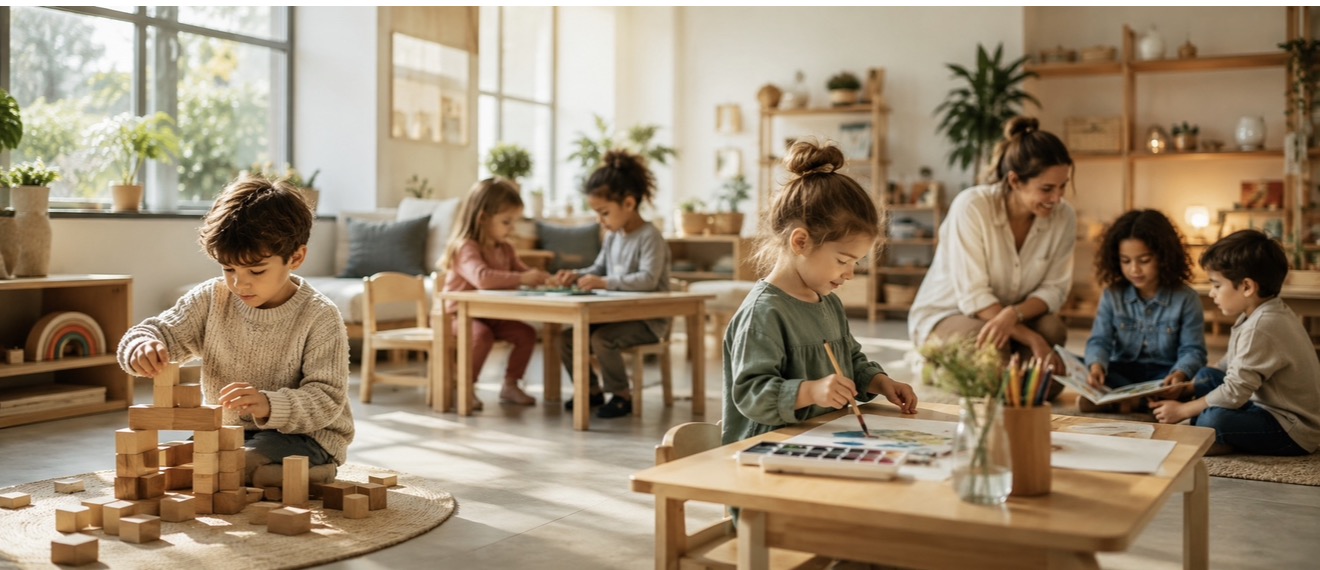
When school activities are organized around a variety of experiences, such as drawing, painting, poetry, theater, storytelling, games, group dynamics, and debates, students come to see school as a space for socialization, transformation, change, and recognition of their own contribution.
“(...) It is important to attend to the playful dimension of school tasks and to make it possible for children to be protagonists, that is, responsible for their actions, within the limits of their developmental possibilities and of the resources mobilized by the learning processes” (MACEDO, 2005, p. 7).
Following this developmental perspective, play becomes a resource through which children gain self-understanding, because, through interaction with their peers, they learn to deal with their own frustrations and to better understand themselves.
“(...) This is the great richness and plasticity of the brain, which, when focused on solving a given problem, develops a process of searching for and selecting increasingly functional and effective strategies. Through experience, it learns to use them increasingly well, not only in the specific context, but also in similar ones” (OLIVEIRA, 2004, p. 7).
For children, games can be understood as challenges. Thus, “one plays for the pleasure of playing, not because its consequences may eventually be positive for something else” (MACEDO, 2005, p. 14).
According to Macedo (2005, p. 18), “the playful spirit refers to a child’s or an adult’s relationship with a task, activity, or person through the functional pleasure they awaken.”
It is important to emphasize that children do not think or live for the future; they live in the present. Therefore, when developing an activity, the educator must consider its immediate benefit for the child and the way the child will engage with that situation.
For Macedo (2005, p. 18), “any activity can be interesting,” provided that it has meaning for the child in the learning process. Often, when an educator observes a child reasoning and reflecting on an activity, the question arises: why is the child engaged in that activity?
Activities carried out in groups, workshops, projects, and computer-based settings stimulate children’s curiosity. By experiencing something new, the child becomes motivated to solve that challenge, that is, that problem-solving situation.
“(...) Something is an obstacle for someone only if it involves some degree of difficulty, greater or lesser, that requires overcoming. For this, it is necessary to pay more attention, repeat, consider something more carefully, think more often or more deeply, or find or create alternatives” (MACEDO, 2005, p. 18).
What Macedo suggests is that playfulness acts as a challenging element, one that encourages freedom of communication and expression, curiosity, and the formulation of hypotheses.
According to Oliveira (2004, p. 15), the educator should “allow the child to act independently and replace a large portion of lecture-based classes with workshops.” In other words, the playful spirit is not related only to games and play; it is also connected to challenges and rule-based games within the school context.
In short, school should be an environment in which children can build their own space and take responsibility for their own actions, in accordance with the limits and possibilities of their development within the process of teaching and learning.
According to the Houaiss Dictionary, as cited by Macedo (2005, p. 9), in one of its Latin meanings, “school” means “amusement” and “recreation”; and, in its Greek sense, “rest, repose, leisure, free time, study time, the occupation of a man at leisure, free from servile labor.
References
CECCON, Claudius; OLIVEIRA, Miguel Darcy de; OLIVEIRA, Rosiska Darcy de. A vida na escola e a escola da vida[Life in School and the School of Life]. 10th ed. Petrópolis: Vozes.
COSTA, Antônio Carlos Gomes da. A presença da pedagogia [The Presence of Pedagogy]. 2nd ed. São Paulo: Global; Instituto Ayrton Senna, 2001.
MACEDO, Lino de; PETTY, Ana Lúcia Sicoli; PASSOS, Norimar Christe. Os jogos e o lúdico na aprendizagem escolar[Games and Playfulness in School Learning]. Porto Alegre: Artmed, 2005.
OLIVEIRA, Vera Maria Barros de. Jogos de regras e a resolução de problemas [Rule-Based Games and Problem Solving]. 1st ed. Petrópolis, RJ: Vozes, 2004.
Reh Freitas