



Beatriz Francisca de Assis Brandão (1779–1868): The Forgotten Poet of Ouro Preto and Her Contribution to Brazilian Literature
Brisa Coelho
Abstract
This essay presents Beatriz Francisca de Assis Brandão (1779–1868), a poet, educator, composer, and translator born in Vila Rica, present-day Ouro Preto, Minas Gerais, whose extensive literary legacy remains largely unknown to the Brazilian public. Drawing on the doctoral dissertation by Cláudia Gomes Dias Costa Pereira, defended at the Federal University of Minas Gerais in 2009, the essay reconstructs Beatriz’s biographical trajectory, examines her poetic production, and discusses the reasons for her exclusion from the national literary canon, placing her within the broader context of nineteenth-century women’s writing in Brazil.
As a writer born in Ouro Preto, Brisa Coelho approaches Beatriz’s legacy from a perspective rooted in the same historical and cultural landscape that shaped the poet’s life and work. In doing so, she seeks to bring renewed attention to a fascinating woman, ahead of her time and determined to shape her own destiny, whose historical and cultural roots are also those of the city that witnessed her flowering.
Keywords: Beatriz Brandão; Brazilian literature; women’s writing; nineteenth century; literary canon.
1. Introduction
The history of Brazilian literature preserves, in its secluded archives and libraries, names that time has attempted to erase—not because they lacked talent or relevance, but because of a systematic exclusion built upon criteria that, for centuries, privileged the male voice. Beatriz Francisca de Assis Brandão is one of those names.
Born in 1779 in Vila Rica, today Ouro Preto, Minas Gerais, Beatriz was a poet, choral conductor, composer, translator, teacher, and pioneer of women’s education in her city. She lived until 1868, leaving behind a literary production that, according to research carried out over thirteen years by Professor Cláudia Gomes Dias Costa Pereira, amounts to more than four hundred pages of texts, most of them still unpublished in collected form.
The doctoral dissertation Contestado Fruto: a poesia esquecida de Beatriz Brandão (1779–1868), defended in 2009 at the Faculty of Letters of the Federal University of Minas Gerais and supervised by Professor Constância Lima Duarte, remains the most comprehensive biographical and literary study of the author to date. It is on this work that the present essay draws in order to introduce Beatriz Brandão to a wider audience and to contribute to the recognition of her importance to Brazilian culture and literature.
2. Ouro Preto: The Cradle of a Pioneering Voice
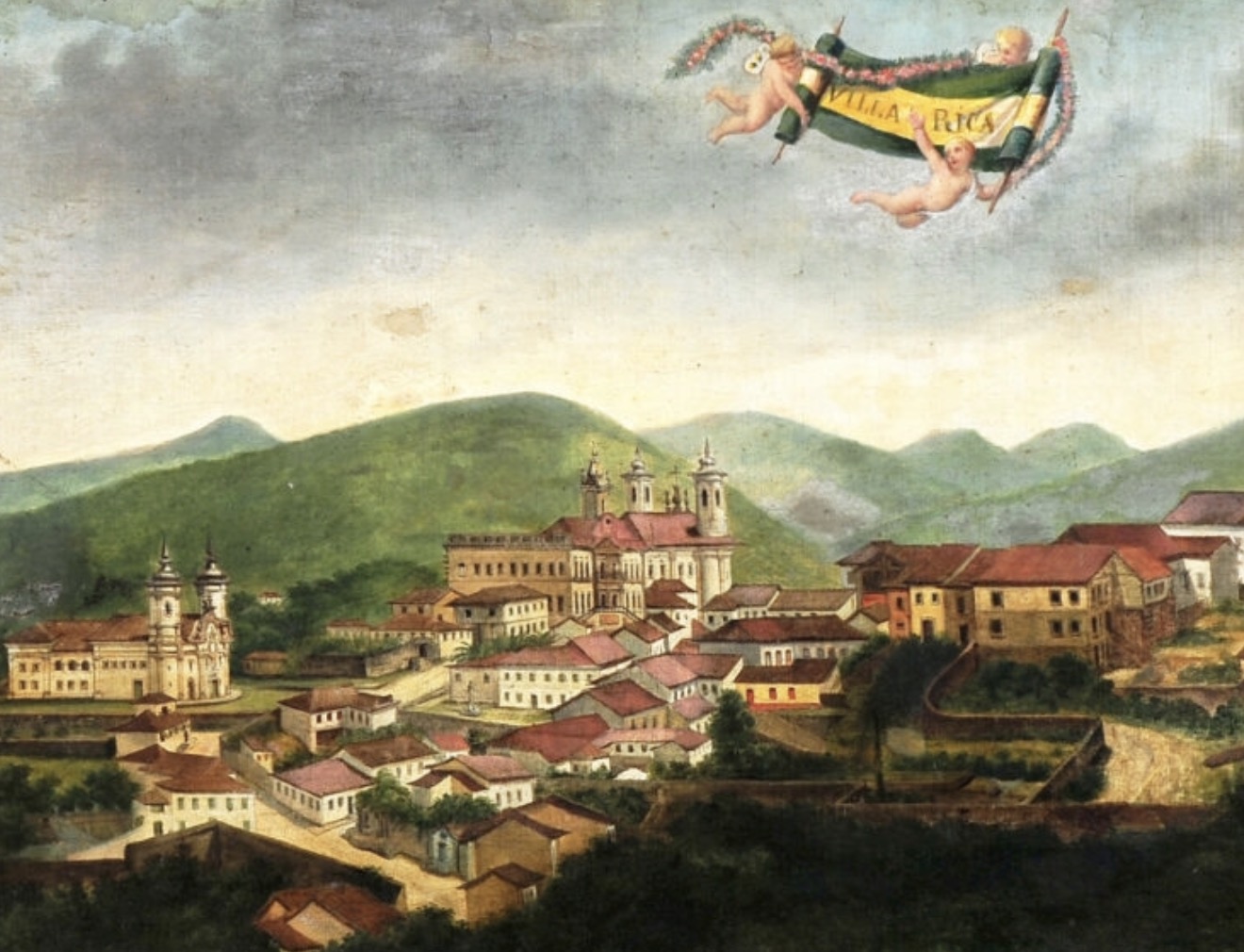
To understand Beatriz Brandão, one must first understand the cultural ground in which she flourished. In the eighteenth century, Vila Rica was more than the capital of colonial mining: it was a vibrant artistic and intellectual center. Its urban environment was frequented by masters of sculpture, painting, and music—Antônio Francisco Lisboa, Manuel da Costa Ataíde, Emerico Lobo de Mesquita, among others—and it was also home to the flowering of Arcadian-inspired poetry in Brazil, inaugurated with the publication of Obras, by Cláudio Manuel da Costa.
According to Pereira (2009, pp. 16–17), the poets of Vila Rica, by invoking the concepts of reason, nature, and truth in accordance with the characteristics of European Arcadianism, “established the path of letters on solid foundations, transforming what had until then been no more than isolated manifestations into an organized literary system.” In that same environment—within the context of the Inconfidência Mineira and the literary ferment that was taking the first steps toward a structured literary tradition—Beatriz Brandão would develop a singular poetic voice.
The researcher places Beatriz alongside names such as Cláudio Manuel da Costa, Tomás Antônio Gonzaga, and Alvarenga Peixoto, all of whom shared the distinction of having been born or having lived in Ouro Preto. Yet while the men entered the canon, Beatriz remained forgotten.
3. A Life of Boldness and Production
The biography of Beatriz Brandão is, in itself, an act of resistance. Reconstructed by Pereira (2009) from scattered archival documents found in the archives of Casa do Pilar, Casa dos Contos, the Municipal Chambers of Ouro Preto and Mariana, the Minas Gerais Public Archive, and the National Libraries of Rio de Janeiro and Lisbon, the writer’s trajectory reveals a woman who, in a society that largely denied women access to literacy, chose—and fought for—the path of letters.
Versatile yet consistent in character, Beatriz followed paths that were remarkably bold for a woman of her time. As the historian Augusto de Lima Jr. observed, she was “the most prestigious intellectual figure in Vila Rica” (LIMA JR., 1961, pp. 63–73, cited in PEREIRA, 2009, p. 24).
In 1829, the newspaper O Universal announced her intention to open a school for girls, where she would teach reading, writing, arithmetic, Italian and French, music, piano, dance, drawing, and embroidery. The following year, in 1830, Beatriz published her first text in the journal O Mentor das Brasileiras. In April of that same year, the Provincial Council appointed her as examiner of candidates for primary schools in Ouro Preto, “as there exists in this city of Ouro Preto no other person of her competence” (LIMA JR., 1961, vol. 3, p. 68, cited in PEREIRA, 2009, p. 75).
In 1831, her poems were published in Parnaso Brasileiro, organized by Canon Januário da Cunha Barbosa, an anthology in which, among several male contributors, only two women appeared: Beatriz herself and Delfina Benigna da Cunha.
She married a younger man and, after twenty-six years of marriage marked by abuse documented in ecclesiastical proceedings, obtained an ecclesiastical separation in 1839. At the age of sixty, Beatriz left for Rio de Janeiro, where she frequented prominent literary circles and published in periodicals such as Marmota Fluminense and O Guanabara. One year before her death, in 1867, her name was included in the Dicionário Bibliográfico Português, by Inocêncio Francisco da Silva.
4. Political Engagement and Patriotism in Verse
Beatriz Brandão’s activity was not confined to the private sphere of writing. In 1822, when Dom Pedro, then Prince Regent, visited Vila Rica, it was Beatriz who organized the reception and composed the welcoming hymn. The newspaper Abelha do Itacolomi (1825, p. 39) described the event:
“(...) after the Emperor’s participation in the festivities at Praça Tiradentes, the Church of Pilar, and the Palace of the Governors, the artillery announced, with 101 cannon shots, the opening of the Municipal Theater of Vila Rica (...). The final ceremony began with the lowering of the portraits of Their Imperial Majesties and, soon after, a Tribute composed by a Lady of Minas was recited; after this, the Honorable President called for cheers (...) and, from one of the boxes, the same Lady of Minas sang the new Hymn of her own composition” (cited in PEREIRA, 2009, p. 72).
Augusto de Lima Jr. compared Beatriz’s civic activism to that of her brother Teobaldo, emphasizing that she “organized the young women, composing patriotic songs, encouraging the timid and the complacent,” and that, “stirring them into action, there stood Beatriz Francisca de Assis Brandão, already consecrated as a figure of the highest rank in intelligence and action” (LIMA JR., 1961, p. 71, cited in PEREIRA, 2009, p. 71).
It is remarkable that this civic engagement coexisted with an intimate and sensitive poetic voice. In her poems, Beatriz moved between European-inspired neoclassicism and deeply human themes: love, longing, nature, death, and the condition of women.
5. The Body of Work: Scope and Diversity
Pereira’s research (2009) brought together, for the first time, the full range of Beatriz Brandão’s literary production: a total of ten sets of texts spanning more than four hundred pages, “never before published as a collection” (PEREIRA, 2009, p. 28). Among the works identified are:
a) Cantos da mocidade (1856) — a book containing eighty-six original poems, published by Tipografia Dois de Dezembro de Paula Brito, in Rio de Janeiro;
b) Cartas de Leandro e Hero (1832/1859) — a translation from French, first published in Parnaso Brasileiro and later as a separate volume;
c) Catão (1860) — a translation from Italian of the tragic drama by Abbot Metastasio;
d) Saudação à estátua equestre de D. Pedro I (1862) and Saudação a D. Violante Atabalipa (1859) — commemorative and tribute poems;
e) poems scattered across periodicals such as O Mentor das Brasileiras, Marmota Fluminense, O Guanabara, and others, from 1830 to 1864;
f) unpublished translations of operas by Metastasio, including Alexandre na Índia, Semíramis Reconhecida, José no Egito, Diana e Endimião, among others.
Over thirty-six years of literary production—“almost all of it carried out in secret, in a society in which women did not even have the right to study”—Beatriz published a book containing eighty-six poems, two translated books, and fifty-eight poems scattered across newspapers and anthologies (PEREIRA, 2009, pp. 501–502). It is worth noting that the author herself stated that part of her work had been burned “by those who did not approve, in a lady, of behavior as bold as writing poetry” (PEREIRA, 2009, p. 502).
Beatriz’s poetic production reveals refined lyrical sensitivity, deep knowledge of the classical tradition, and considerable skill as a literary translator. The verses she herself chose as the epigraph to Cantos da mocidade precisely express her stance before the world:
I fought with courage, and if triumph / I did not fully achieve, I had at least / The glory of steadfastness amid sorrows, / In privations, in the thousand obstacles / With which they sought to block the path / To which a violent impulse drew me. / Here, of my constancy I offer you / The contested fruit; it is of little worth, / But your indulgence will give it value, / And it will be well received as an offering / From a compatriot, from a Brazilian woman. (BRANDÃO cited in PEREIRA, 2009, p. 6).
6. The Silence of the Canon: Why Beatriz Was Forgotten
The central question of Pereira’s dissertation (2009) is precisely that of forgetting: how could a writer of such production and relevance disappear from Brazilian literary historiography?
The researcher notes that, in the twentieth century, Beatriz appears in very few works, among them Panorama da Literatura Brasileira, by Afrânio Peixoto (1940, pp. 5–9), where she is listed alongside only eight other women writers in a universe of 416 authors (PEREIRA, 2009, p. 23). Her absence from the national literary canon is the result of an ideological exclusion that removed women—and especially nineteenth-century women—from the spaces of literary consecration.
Beatriz and her contemporaries, such as Ângela do Amaral, Bárbara Heliodora, Delfina Benigna da Cunha, Violante Atabalipa, and Nísia Floresta, lived and wrote in the nineteenth century and disappeared from literary history in the twentieth. As Pereira observes (2009, pp. 500–501), “the literary canon still excludes many women, but if, as the ideological construction it represents, it cannot be changed, the way we look at literature has, on the other hand, changed.”
The comparison with her cousin Maria Dorotéia Joaquina de Seixas—the famous Marília de Dirceu, immortalized in Gonzaga’s verses—is revealing: while Dorotéia was granted a borrowed eternity by a male poet, Beatriz, herself the author of verses and hymns, remained in the shadows. The irony did not go unnoticed: the woman who composed, conducted, and published was forgotten; the woman who was sung by another was remembered.
7. The Woman of Letters in Nineteenth-Century Brazil
To contextualize Beatriz’s trajectory, it is essential to understand the place of women in nineteenth-century Brazilian society. Women’s education was precarious or nonexistent for most; access to the press was restricted; and the publication of texts by women was often met with suspicion or condescension.
Beatriz studied in secret, fought for her intellectual and social advancement, founded a school for young women, and dreamed of extending her achievements to all the women of her time. In her address to the Municipal Chamber of Ouro Preto in June 1831, when presenting the results of her first class of female students, she demonstrated not only pedagogical competence but also an awareness of the transformative role of women’s education.
Pereira (2009, p. 501) emphasizes that the network of women writers of which Beatriz was a part “was driven by the political, social, and economic transformations that were fermenting in the nineteenth-century Brazilian scene, such as Independence, the end of slavery, and the proclamation of the Republic,” and that these transformations brought about “a different social view of women, whose education came to be seen as a condition for the progress of the nation.”
Beatriz was, therefore, both a product and a producer of her time: a woman who not only wrote about the world, but also acted upon it.
8. Final Considerations
To make Beatriz Francisca de Assis Brandão known is an act of historical and literary justice. Her life and work challenge the idea that Brazilian women of the nineteenth century were merely domestic figures, marginal to cultural production. On the contrary, she was one of the most productive writers of her time, and one of the most courageous.
As Pereira wrote (2009, p. 502), “Beatriz Francisca de Assis Brandão, the illustrious yet unknown daughter of Ouro Preto, through her effective participation in the Brazilian historical and literary context and, above all, through the invaluable contribution of her work to Brazilian literature, reveals, once again, how little is still known about women’s participation in the construction of this country’s history.”
May the acceptance of Beatriz Brandão as Patroness of The American Society of History, Arts & Letters (ASHAL) stand as one more step—both symbolic and concrete—toward the recognition she has always deserved.
References
Primary Source
PEREIRA, Cláudia Gomes Dias Costa. Contestado Fruto: a poesia esquecida de Beatriz Brandão (1779–1868). Doctoral dissertation in Letters – Literary Studies. Faculty of Letters, Federal University of Minas Gerais, Belo Horizonte, 2009. 524 p.
Works by Beatriz Brandão Cited
BRANDÃO, Beatriz Francisca de Assis. Cantos da mocidade. Rio de Janeiro: Empresa Tipográfica Dois de Dezembro de Paula Brito, 1856. v. 1.
BRANDÃO, Beatriz Francisca de Assis. Cartas de Leandro e Hero. Extrahidas de uma traducção franceza. 2nd ed. Rio de Janeiro: Tipografia de B.X.P. de Sousa, 1859.
BRANDÃO, Beatriz Francisca de Assis. Catão. Drama trágico pelo abade Pedro Metastasio, traduzido do italiano. Rio de Janeiro: Tipografia B.X.P. de Sousa, 1860.
Works about Beatriz Brandão Cited in the Dissertation
LIMA JR., Augusto de. “Beatriz Francisca de Assis Brandão, musa da Independência, vida gloriosa e trágica.” Revista do Instituto Histórico e Geográfico de Minas Gerais, Belo Horizonte, v. 8, pp. 63–73, 1961.
PEIXOTO, Afrânio. Panorama da literatura brasileira. Rio de Janeiro: Companhia Editora Nacional, 1940. pp. 5–9.
SILVA, Inocêncio Francisco da. Diccionario Bibliographico Portuguez. Lisbon: Imprensa Nacional, 1867. Tomo oitavo, p. 367.
Brisa Coelho